95bFM
95bFM What Jimmy Kimmel’s suspension and subsequent reinstatement means for free speech in the US
30 September, 2025
Interview by Max Micheel, adapted by Zanoor Penny
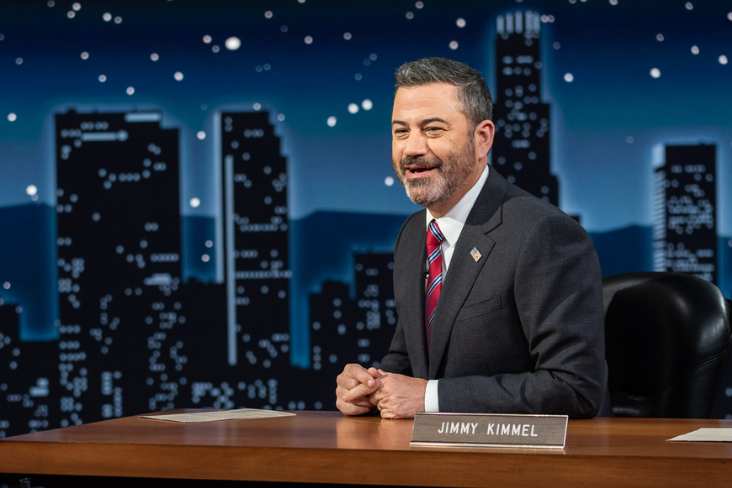
The University of Auckland’s Stephen Hoadley says that the suspension of Jimmy Kimmel highlights the increasing polarisation between liberals and conservatives in the United States of America and encroaches on the First Amendment right to Freedom of Speech. Image: Jimmy Kimmel (2022) - Wikimedia Commons
Recently, US television host Jimmy Kimmel was suspended over his comments about the assassination of far-right podcaster Charlie Kirk. The ABC network, owned by Disney, made this decision after pressure from the Federal Communications Commission (FCC) and the Trump Administration.
This follows Kimmel saying MAGA supporters were "desperately trying to characterise this kid who murdered Charlie Kirk as anything other than one of them," and were attempting to “score political points from it”.
Chair of the FCC, Brendan Carr, had said that Kimmel was “appearing to directly mislead the American public”.
However, Kimmel’s suspension caused public outrage, with many people cancelling their Disney+ subscriptions in protest and hundreds of notable celebrities expressing their support for Kimmel.
As a result of these actions, Disney lost an estimated $3.8 billion USD ($6.57 billion NZD) in market value, swiftly announcing that Kimmel’s talk show, Jimmy Kimmel Live!, would be reinstated.
The cancellation of Kimmel’s show has raised concerns about free speech in the US.
Retired Professor in International Relations at the University of Auckland, Stephen Hoadley, told 95bFM’s The Wire that removing Kimmel over comedic commentary on current affairs stifles the notion of comedy as a means of human expression.
“The comments themselves seemed fairly anodyne; fairly ordinary in the context of the comedy show that it is.
“We have to remember that comedy at its base is always making fun of somebody. That is, there's always a butt of the joke. So comedy by its very nature is critical because somebody is going to be offended.”
Hoadley says media organisations such as Disney can take anybody off air for whatever reason. Usually, it is due to a decrease in popularity, that they are not earning enough money, or even ideological prejudice. However, he says this situation is different.
“The fact that Brendan Carr, a Trump appointee as director of the FCC, weighed in and said, ‘we can do this the easy way or the hard way,’ then [that] points to government intervention into the area of media, and raises the fundamental issues of the First Amendment to the Constitution of the protection of free speech.
“It's certainly clear to critics on the left of the political spectrum that this unfair and possibly illegal intervention by the FCC at the behest of Trump himself is improper, illegal, and is tipping the corporate balance against a robust public dialogue and against the First Amendment free speech protections.”
Hoadley says various factors are at play in the decisions to suspend and reinstate Kimmel.
“[People across the political spectrum, from liberals to the centre right] all criticised this decision, and maybe ABC took this into account that this was an important audience, and to curb a popular programme which looked like it was being curbed because of Trump's governmental pressure, was not a good look, and in fact would lose the ABC and Disney more money than it would gain.
“[This includes] the fact that ABC wanted to have mergers that required FCC approval; that the FCC does have the power to take stations off the air.”
Although ABC has officially reinstated Kimmel nationally, Hoadley says affiliate stations on local networks are still free to change programming to fit their individual agenda. Therefore, in predominantly conservative ‘red’ states, Kimmel is not back on air.
Hoadley says the polarised reactions between liberals and conservatives in the United States bring up concerns about the future of American democracy, and he believes that Donald Trump does not hold a reasonable definition of free speech.
“Free to [Trump] means it agrees with him, and it doesn't apply to those who criticise him.”
Hoadley says Trump’s approval rating is declining, but little can be done until the next election.
He highlights that Democrats will remain a minority until they rally behind an effective and persuasive leader.