95bFM
95bFM Landlocked and locked out: Māori struggle to access ancestral land
30 January, 2026
Interviews by Jasmine Gray, adapted by Gabriella Magdalene
A recent report by Herenga ā Nuku, the Outdoor Access Commission, reveals that up to a third of Māori property in Aotearoa is landlocked, making access impossible for thousands of landowners.
The study offers the first national reviews of public land access, based on decades of mapping, fieldwork, and specialised expertise. The goal is to educate the public about the impact of landlocked blocks on Māori land owners and public access
Doug McCready, Strategic Relationships Manager at Herenga ā Nuku, told 95bFM’s The Wire that the purpose was to convey the organisation's experience in an approachable way.
“There's just a wealth of knowledge and history relative to the kaupapa. We felt that one thing that we could do was basically summarise and capture the knowledge we have in a form that was palatable for the public, in terms of giving a general picture of what public access looks like in New Zealand.”
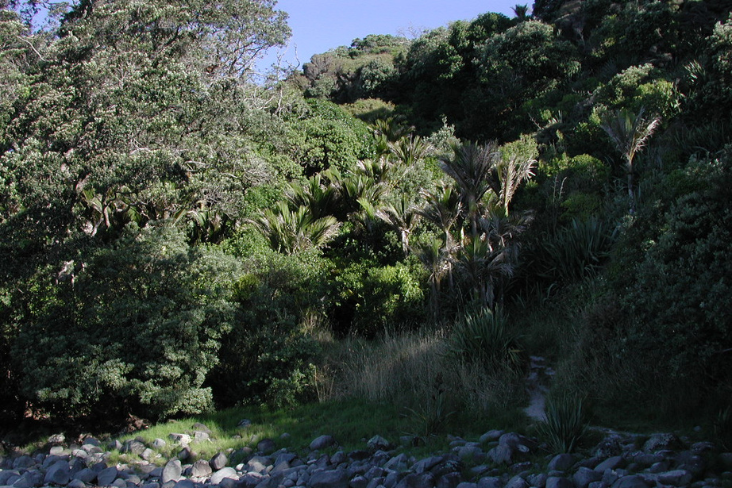
The analysis reveals that many Māori land blocks are in isolated places with steep terrain or extensive vegetation. McCready points out that landlocked does not automatically imply inaccessibility, yet it is nevertheless incredibly difficult for owners to access their own land.
“There's kind of degrees of landlocked. So it may be landlocked from a driving and an easy access point of view, but for an experienced tramper navigator, it may technically not be landlocked.”
McCready also refutes the notion that Māori land restrictions limit public access.
“Based on mapping and observation, it's actually typically the other way around.”
Colonisation left Māori with unsuitable and difficult-to-access land, exacerbating the current issue. Unformed legal roadways, which were drawn on paper but never built, make access even more difficult.
“The consequence is that we have these many, many blocks that are steep, they're rugged, they're often covered in bush, and they're very difficult to access physically.”
Professor Margaret Mutu told 95bFM’s The Wire that this is a problem that has affected Maori ever since the Māori land Court was established in 1865. This places the matter in historical context, highlighting its long-standing impact on Māori and ongoing legal disparities
She stresses the inequality of treaty settlement obligations, which oblige Māori to grant public access to land returned to them while they struggle to reach other blocks of their own whenua.
“We are required by law to provide public access to our own lands that were stolen off us, that are returned under the Treaty settlements process.”
She thinks the study would boost Māori landowners’ confidence to assert their rights.
“This is not right. It's never been right. And we're not going to be restricted by these crazy laws.”
Improved access to Māori blocks could promote conservation, ecotourism, and strengthen links between whānau and whenua.
The research emphasises the importance of addressing past inequalities and recognising Māori rights in Aotearoa, beyond only practicing access concerns. Mutu notes the importance of developing a multifaceted approach to tackling this problem.
“There is a massive injustice here that discriminates against Māori landowners… and this is something that must be addressed by the Pākehā Parliament because Māori are going to address it under our own laws, our own tikanga.”