95bFM
95bFM Commuters will need to make billions of trips across the Harbour Bridge to pay for new harbour crossing
27 February, 2026
Interview by Alex Fox, Adapted by Vihan Dalal
The Infrastructure Commission has proposed introducing a $9 toll on the Harbour Bridge to fund a new Harbour Crossing to the North Shore. However, Dr Timothy Welch says commuters will need to take a lot more trips across the current bridge to fund the new crossing. He suggests the government make more efficient use of existing roads, instead of spending money on a new infrastructure project.
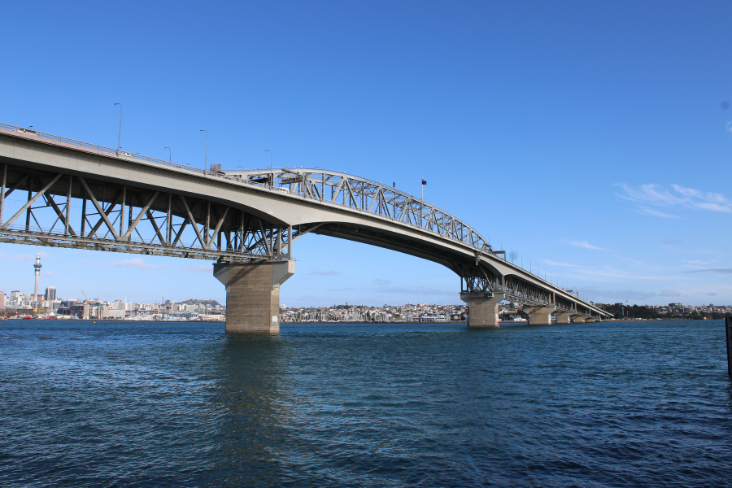
Commuters will need to make three billion trips across the harbour bridge to cover the costs for a second harbour crossing.
The Infrastructure Commission has suggested the government impose a nine dollar toll each way on the current Harbour Bridge. This will be used to fund a second crossing to the North Shore of Auckland, along with tolling the new Waitematā Harbour Crossing.
Finance Minister Nicolla Willis told RNZ the toll for the current bridge is a hypothetical scenario, while Labour says such a move would need to be given careful consideration.
Senior Lecturer in Architecture and Planning at the University of Auckland, Dr Timothy Welch, told 95bFM’s The Wire it would take three billion trips across the Harbour Bridge to pay for a second crossing if the nine-dollar toll were to be implemented.
“Right now we have 63 million trips. We're talking 44 years of tolls just to pay for a second crossing at the current cost estimates.”
Welch says existing funding is already earmarked for other projects, meaning new revenue would be necessary for another harbour crossing. However, a toll on the current bridge won’t be enough.
The estimated toll revenue from the current bridge would be between seven and nine billion dollars, whereas the new crossing would cost over $20 billion to build.
Welch says commuters could be financially affected due to the proposed tolls on the Harbour Bridge.
“There is a substantial group of people for whom nine dollars to cross the bridge is quite a hit. If it's both ways, we're approaching 20 dollars each day just for driving across.”
“And then the same people need to find parking on one side or the other of their trip, etc. It becomes really expensive, especially for people in lower income brackets.”
Welch suggests using a single lane for transport across the bridge to reduce congestion, along with adding a cycling and walking lane, instead.
“It seems counter intuitive because we're reducing the capacity overall in terms of vehicles, private vehicles. But when we add better bus trips, faster bus trips, and more of them and more options like walking and cycling by using a lane, we actually make it much more efficient and give people many more affordable options so that they aren't forced to be in a vehicle to cross that bridge.”
Increasing connectivity would make commuting to the North Shore more efficient, and using existing roads would be cheaper than building a new bridge.
Welch says the approximate cost of conducting a feasibility study on a new bridge is $100 million, whereas it would cost $150 million to create additional cycle paths and busways on the Harbour Bridge.
“So for a very little more than we've already spent just studying the idea of a second crossing, we could have already had the efficient capacity or the efficient infrastructure on the bridge to make all of this work.”
The Auckland Harbour Bridge SkyPath project, proposed in 2010, was supposed to be a one-kilometre walking and cycling clip-on pathway. The $30 million project faced delays and design challenges before being scrapped altogether due to engineering challenges.
“But all of these [plans] have been mixed and we're now looking at essentially the most expensive, least feasible option of all, which is potentially a tunnel under the harbour.”