95bFM
95bFM Myanmar executes four pro-democracy activists
29 July, 2022
Interview by Stella Huggins, adapted by Jack Horsnell
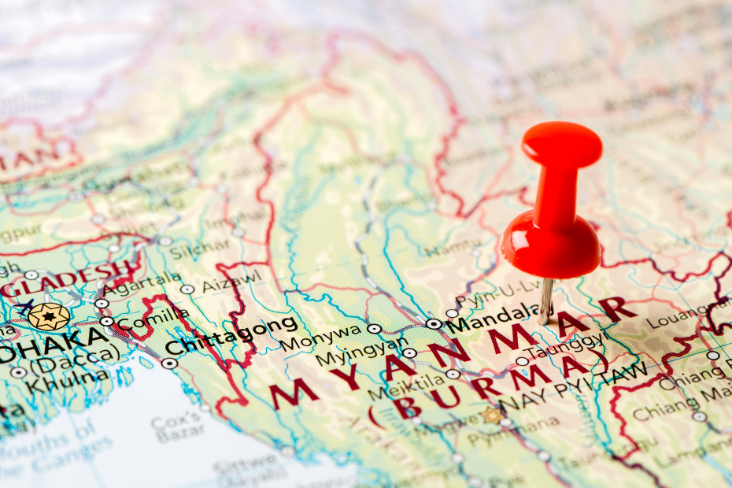
The chief of the Myanmar military (the Tatmadaw), Senior General Min Aung Hlaing, has appointed himself the chair of the State Administration Council and Prime Minister of the takeover government he formed. Photo: Canva.
Countries around the world are condemning the military government of the South East Asian Nation, Myanmar, following the execution of four pro-democracy activists.
The country's junta government took over during a military coup in February of 2021 and have been cracking down on opposition through brutal tactics since.
The junta declared a state of emergency claiming the election of 2020 was rigged. While they said military control would last one year, it has now been 17 months.
The four activists were sentenced to death earlier this year in closed-door trials, accused of aiding “terrorist acts” in alliance with civilian resistance forces who have been fighting the military since the coup.
The junta claims that the executions were “justice for the people."
Yet, in the last year, the junta has killed at least 1500 people involved in protests against the coup, including children.
International relations researcher, Dr Wendy Choo, told 95bFM's The Wire that using the label “terrorist” is an attempt by Myanmar's military leadership to defend their actions.
“I don’t think the state's definition of terror matters because the military state in Myanmar is trying to label any sort of opposition as terrorists. It’s their way of justifying military rule."
Choo believed that these executions are an attempt to convince the public that the government is trying to protect them, not oppress them.
She said the information that the government is releasing is not the reality of of what's going on.
“We need to be careful with the rhetoric of the state. “Many of Myanmar’s citizens see these men as freedom fighters who are trying to liberate them from a military dictatorship."
The four activists were prominent in the pro-democracy movement, and many believe that their executions were an attempt to dishearten the protesters.
The government has even refused to return the bodies of the victims to their families, to stop their funerals from becoming triggers for protest events.
“We can see through Burmese history that the funerals of prominent individuals can become triggers because activists use funerals and other major events to gather people and to protest against the state," Choo says.
New Zealand has condemned military regime for the killings, and taken steps such as enforcing travel bans on individuals linked to human rights violations in the state.
But Choo said more can be done to support the Myanmar people.
Recently, a petition has been delivered to Parliament to allow 1000 refugees from Myanmar whose families are New Zealand citizens, permanent residents, and asylum seekers, to be resettled in New Zealand.
"The Government has provided strong humanitarian support for Ukrainian refugees and could extend the same concern and compassion to Myanmar refugees by supporting the petition."
Public interest journalism funded through NZ On Air