95bFM
95bFM A guide to Three Waters
31 May, 2022
By Jack Horsnell
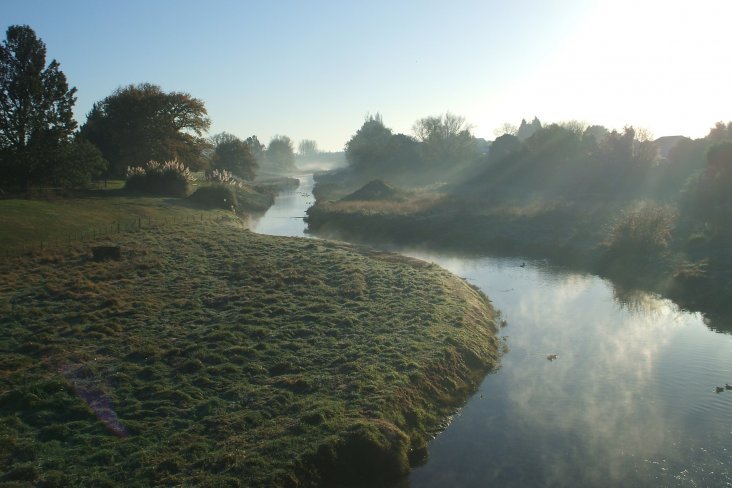
Calls to reform Aotearoa's water infrastructure began in 2016 when four people died in Havelock North due to the town's water being contaminated with E. coli. Photo: Wikimedia Commons.
Three Waters reform has proven to be a topic of contention, with conflict between local councils and the government dominating the headlines.
Yet many are still wondering... what is Three Waters?
On 95bFM's The Wire Jack Horsnell asked Whanganui Mayor, Hamish McDouall and Auckland Councillor, Shane Henderson to explain.
So what is Three Waters? Are they still, sparkling, and lime?
Not quite. The three waters in question are drinking water, wastewater, and stormwater.
Calls for water reform started after the Havelock North incident in 2016, where four people died and 5500 became sick due to the town's water being contaminated with E. coli.
It was revealed after the incident that New Zealand's water infrastructure needed a 120 billion upgrade to ensure it is reliable and safe for the future.
The country's water systems are currently controlled regionally by 67 local boards, but they can't afford to foot the bill to fix these problems, so the Government has taken control of water infrastructure reform.
The Water Entities Bill, introduced by Minister of Local Government Nanaia Mahuta, will attempt to centralise water care into four separate entities, in order to distribute funds evenly across the country.
These entities would be owned by the councils involved but funding would come from the government for long-term infrastructure investments.
According to Mahuta the bill would secure local community ownership of the water entities while also ensuring iwi/hapu Māori interests in the system, which does not extend to ownership.
At first, the proposed reforms were accepted by every local board, but then they started pulling out.
Why is there conflict surrounding the reforms?
Whanganui Mayor Hamish McDouall said that amalgamating water care makes easier for the government to privatise water, and could mean councils lose ownership.
“If you’re in a rural council or a regional council, you’re at the bottom of a food chain. If a pipe breaks in a small rural community outside a primary school, how long is it going to take to get fixed?”
However, Auckland Councillor Shane Henderson argued that centralising water care would be positive for communities across the country.
He said Wellington is a good example of why these infrastructure upgrades are needed.
"New Zealand needs 110 billion dollars over 30 years to maintain their water infrastructure. That would be a massive cost to the country’s ratepayers.”
Conflict surrounding the reforms was also heightened by a controversial marketing campaign released by the Ministry of Internal Affairs.
In the advertisements, the government outlined why their reforms are needed, and what they plan to do. But many local governments were offended by them, claiming they were scare mongering.
“The government did not do a good job explaining the rationale behind the reforms, the cartoons that were on TV were patronising,” McDouall said.
Some councils also felt the advertisements made it seem like local boards were incapable of fixing their water problems.
“Local governments have done a lot of good work over the years,” McDouall said.
Oppositon to co-governance
The co-governance of the four entities by both Mana Whenua and councils has proven controversial, despite councils owning the assets.
National Party leader Christopher Luxon has stated that while he agrees water infrastructure reform is needed, they oppose a co-governance model.
"Make no mistake, National opposes the Three Waters Agenda, and if elected in 2023, we will repeal and replace this broken model."
Members of parliament including Labour's Mahuta have experienced a recent uptick in anti-Māori abuse online, surrounding issues such as co-governance.
Ngāi Tahu has threatened to walk away from its partnership with three of the South Island's biggest councils after their response to Three Waters.
In a statement from Ngāi Tahu, the iwi said they support the reform, particularly with its focus on Te Mana o Te Wai; the idea that we should prioritise the health of water over our use of it, and the government’s commitment to having iwi, hapū, and councils involved in all decision making.
But McDouall claimed fears surrounding ownership being transferred to Iwi Māori is not why councils are opposing Three Waters.
"It is absolutely not the case, it has never even been suggested.”
After its first reading, the bill will open for public submissions at the select committee. The water reforms are expected to be put into place by 1 July, 2024.
Public interest journalism funded through NZ On Air